

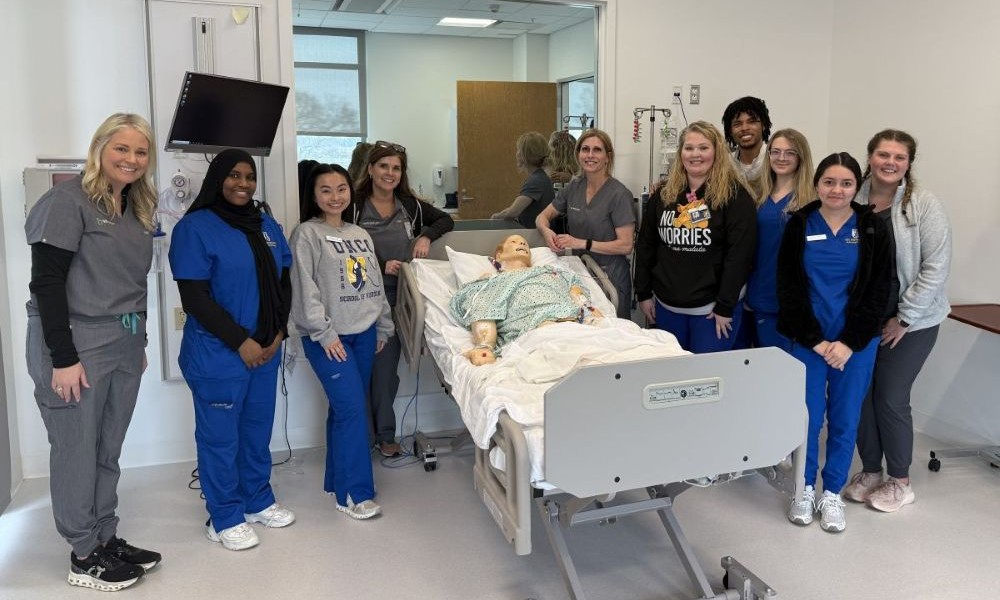
UNCG School of Nursing is the only nursing school in the nation currently selected to offer this specialized training in collaboration with Solventum.
This past academic year, the UNCG School of Nursing partnered with Solventum, formerly 3M Health Care, to offer its senior nursing students immersive, hands-on training with advanced medical devices as part of their capstone experience. The two-day sessions held this past spring semester at the School’s SCENE Simulation Center introduced 136 nursing students to cutting-edge technologies they are likely to encounter throughout their nursing careers.
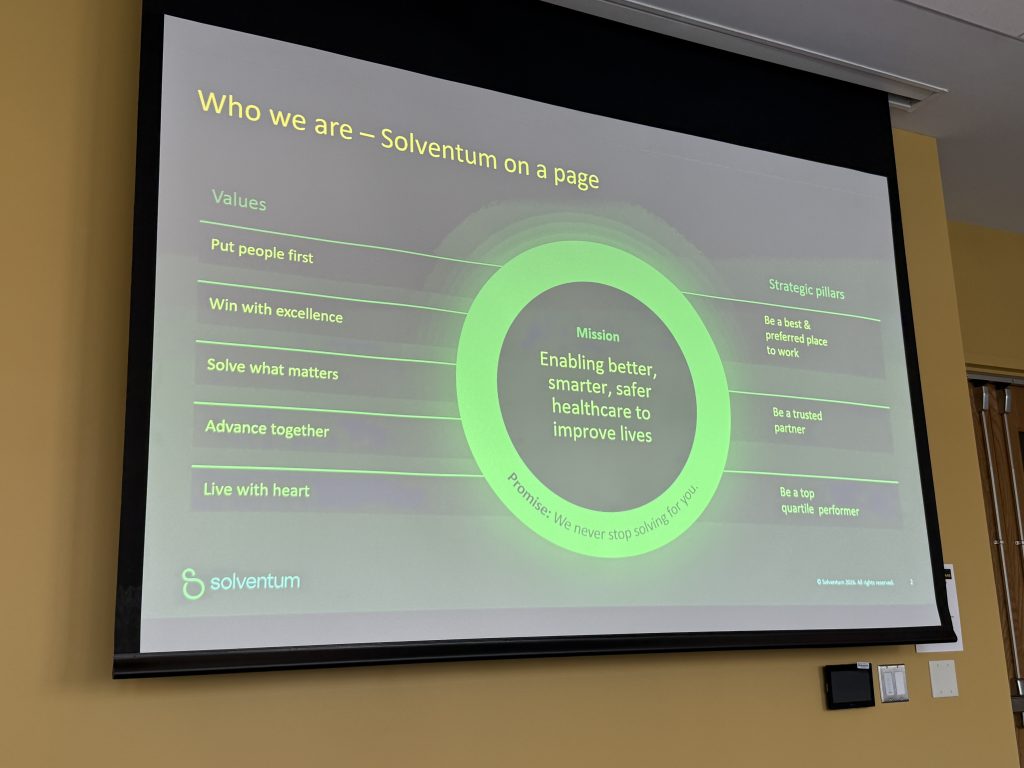
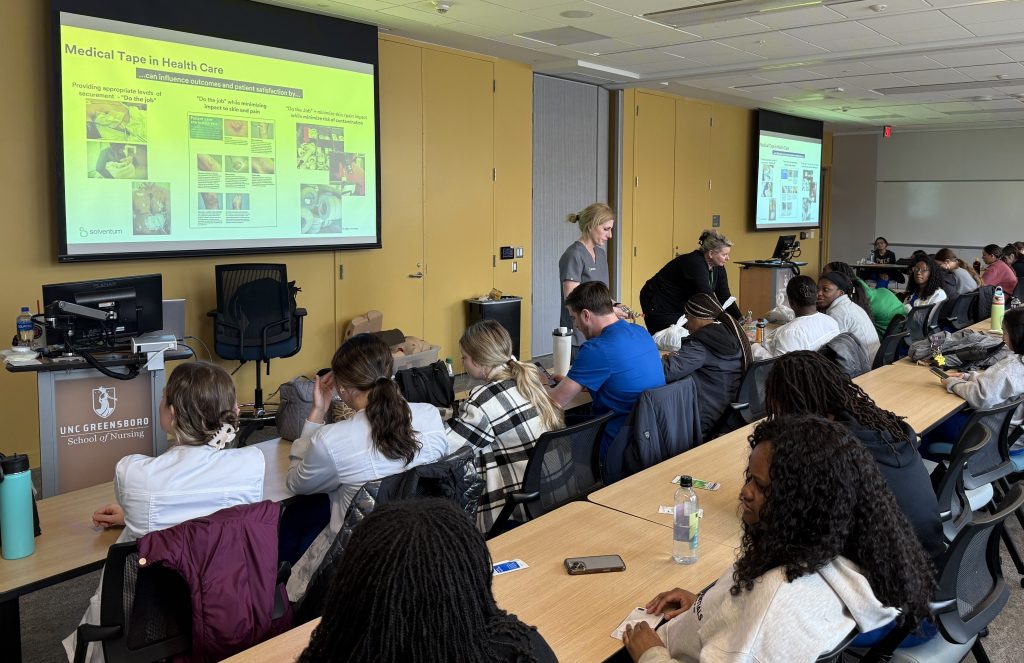
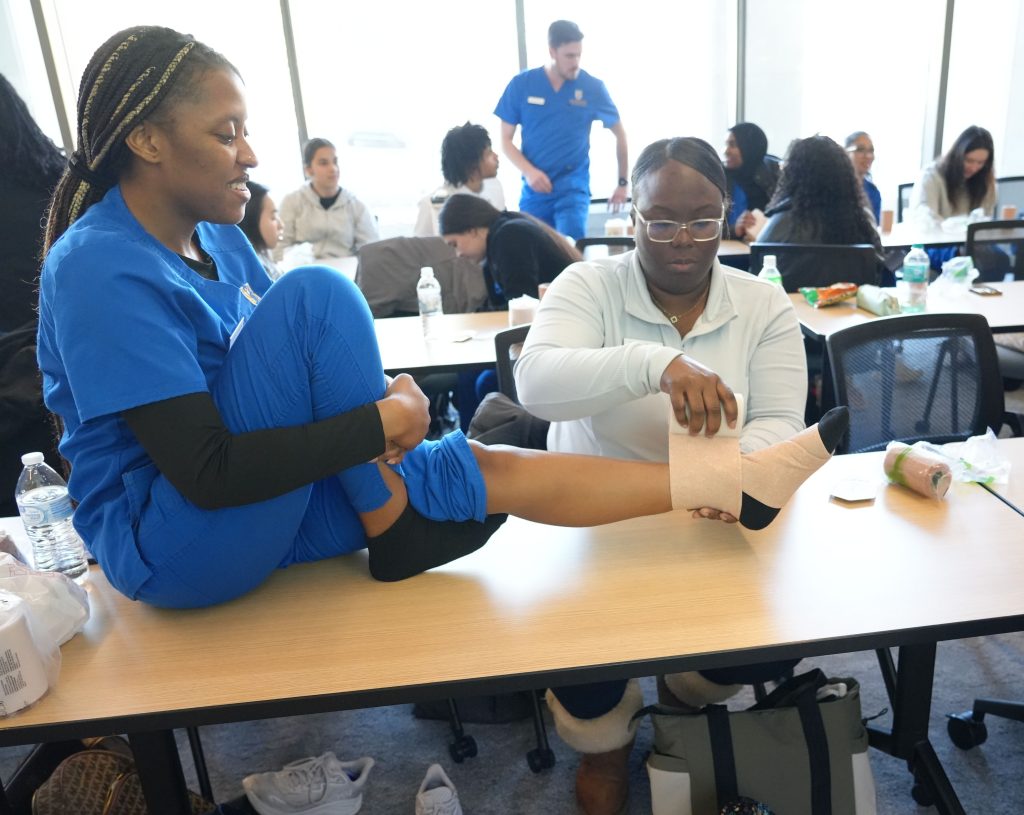
Nursing students at UNCG participate in a seminar led by Solventum Specialists on advanced patient care techniques.
UNCG School of Nursing is the only nursing school in the nation currently selected to offer this specialized training in collaboration with Solventum, underscoring its leadership in innovative nursing education. Solventum trainers traveled from their headquarters in Minnesota to Greensboro specifically for the program.
The program equips students with practical experience using advanced medical devices and technologies essential for their transition into professional nursing practice.
“When Solventum discussed partnering exclusively with us to pilot this project, we shared a vision of familiarizing students with their products in health systems and exploring the ‘why’ behind their use—bridging the gap between education and practice,” says Dr. Debra Barksdale, dean of the UNCG School of Nursing. “We want to help students connect evidence-based learning with hands-on applications to improve health outcomes.”
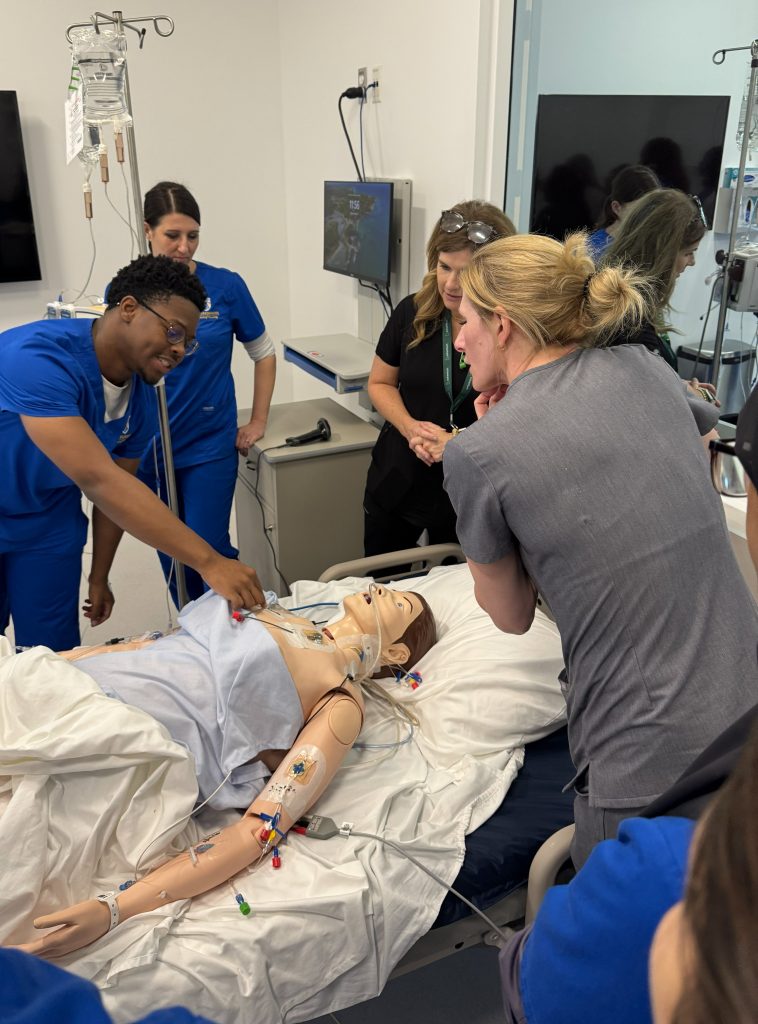
Over the two days, students collaborated directly with Solventum trainers, receiving instruction and practical experience with devices and products, including IV site management, infection prevention, vascular and enteral device securement, disinfecting caps, prevention of medical adhesive-related skin injury, wound care, negative pressure wound therapy, skin protection, and compression therapy.
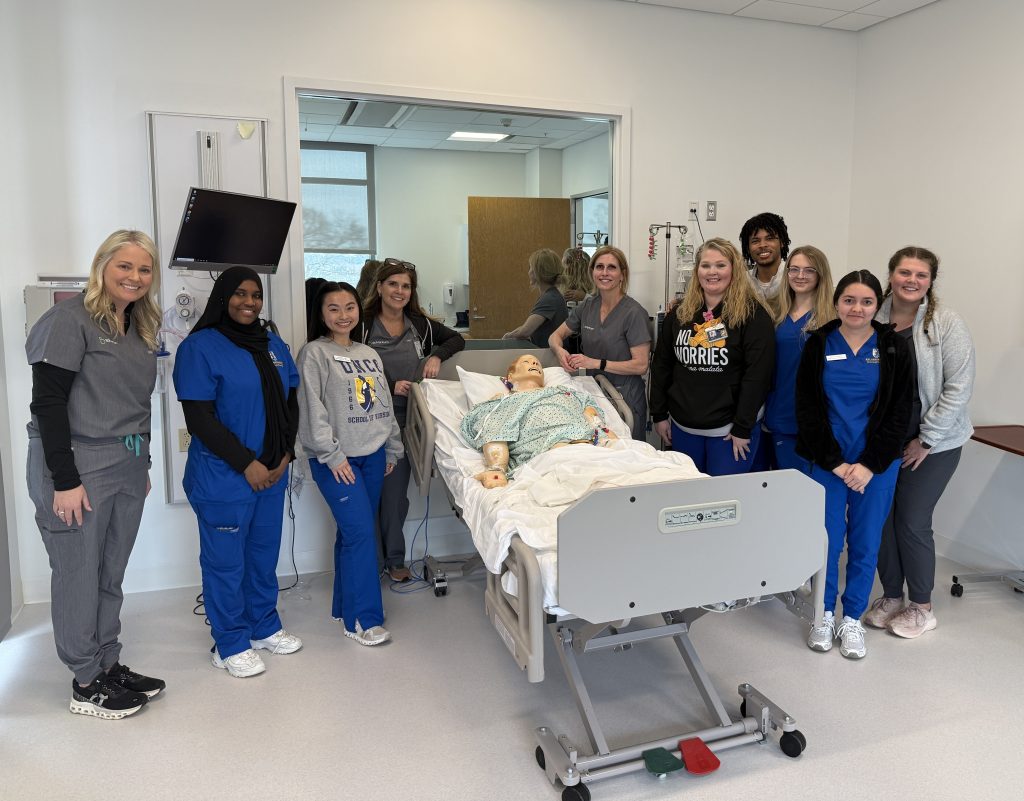
By training in a simulation environment that mirrors real clinical healthcare settings, students engage with manikins, wound models, and live demonstrations, moving beyond traditional lecture-based learning.

Paige Walters, Greensboro, NC-based Solventum Surgical Healing Specialist,” Solventum’s involvement reflects its mission to enable better, smarter, and safer healthcare grounded in 3M’s long-standing reputation for innovation and quality. By partnering with UNCG School of Nursing, Solventum is investing in the future nursing workforce and supporting educational models that prioritize evidence-based practice and real-world readiness. Many of these rising graduates will be competing for jobs in local health systems, which currently utilize these devices daily.”
Paige Walters, Solventum Surgical Healing Specialist, works with UNCG Nursing Students on advanced patient care techniques.
The training was held at the UNCG School of Nursing’s SCENE Simulation Center, a state-of-the-art facility that replicates real-world clinical settings. Led by SCENE Center Director Tommy Mann and his expert simulation team, including Merry Prior, Brittany Norman, and Derrick Owsley—with academic and clinical oversight from Dr. Aimee Motley, the sessions guided students through lifelike scenarios using current hospital-grade equipment and supplies.
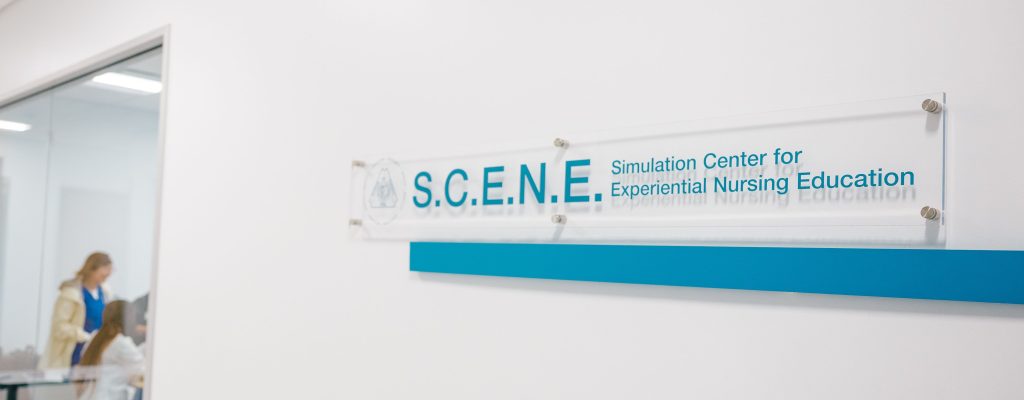
As technology rapidly evolves, UNCG’s partnership with Solventum ensures students are prepared to operate the latest equipment.
“This partnership demonstrates our commitment to innovative, current education that leads to improved patient care,” said Tommy Mann. “Our students graduate with hands-on experience in the advanced technologies found in hospitals nationwide.”
For Solventum, collaboration reflects a mission to enable better, smarter, and safer healthcare — one rooted in decades of science-based innovation. By working directly with UNCG, the company is helping prepare a nursing workforce with current technical knowledge and a strong focus on patient safety.

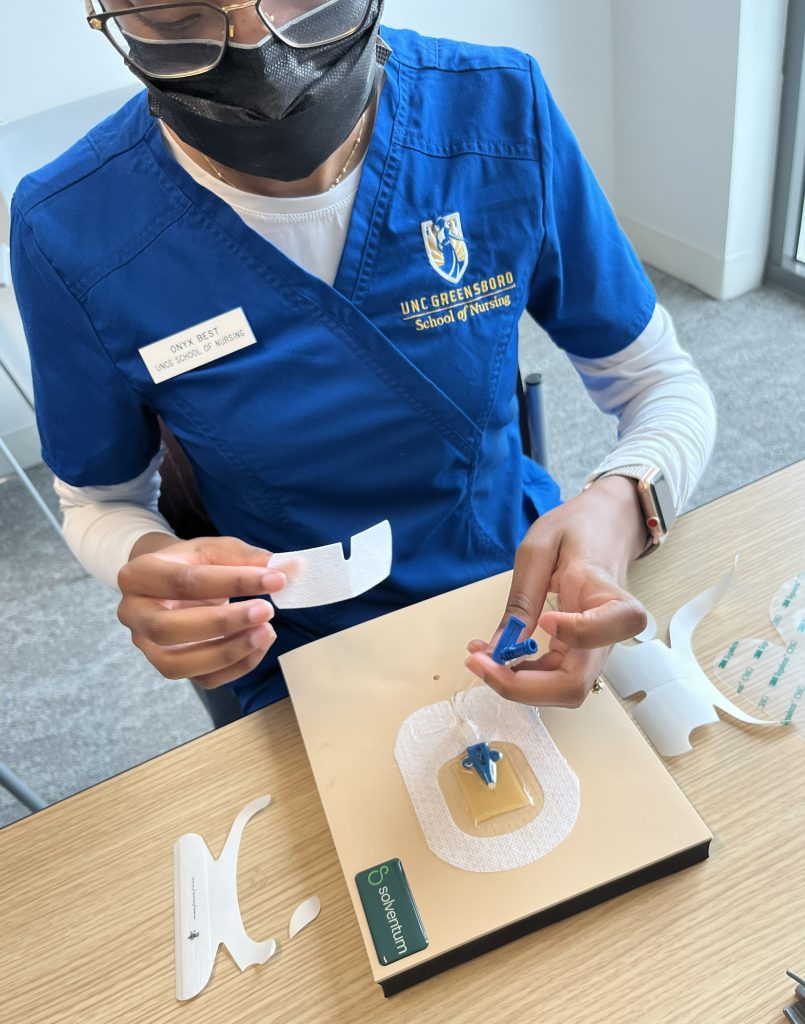
This experience was impactful because it forged a direct connection between classroom learning and clinical practice. Rather than learning about these technologies in theory, students applied them in simulated clinical environments using manikins, wound models, and live demonstrations. This hands-on approach built confidence, reinforced critical thinking, and strengthened patient safety skills before students transitioned into professional roles.
As one student shared, “Getting the chance to work with the same equipment used in hospitals made all the difference. I feel much more confident and ready for my clinical rotations.”
The partnership reflects UNCG School of Nursing’s broader commitment to preparing graduates who are ready to deliver safe, effective, and compassionate care from their first day in practice.

